Workflow Optimization Principles
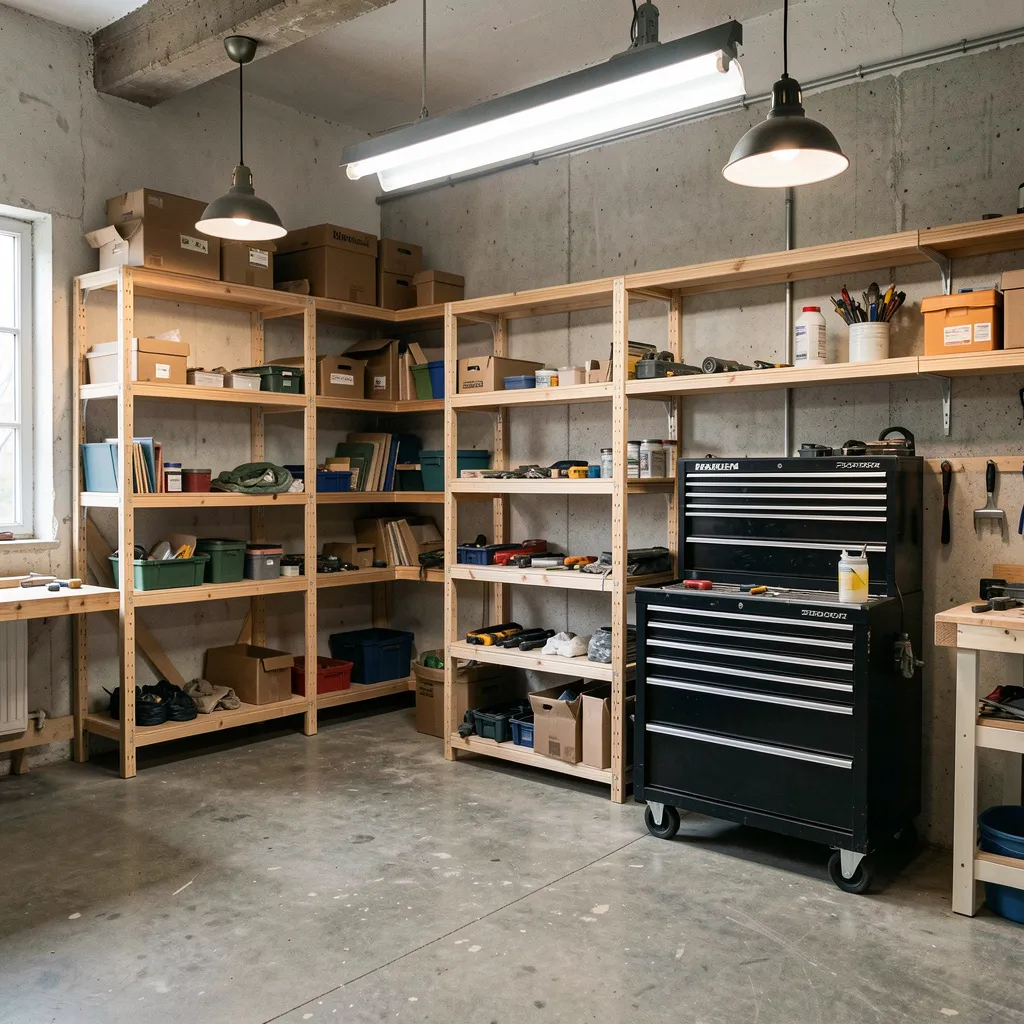
The Triangle of Efficiency represents the three critical zones in any productive workspace and their optimal spatial relationships.
Workbench Zone
The primary work surface serves as the central hub. This zone should accommodate the most common tasks and provide adequate space for material handling and assembly operations.
Tool Storage Zone
Wall-mounted and overhead storage positioned within arm's reach of the workbench. Frequently used tools occupy prime locations, while specialized equipment remains accessible but secondary.
Project Area Zone
Dedicated space for active projects and material staging. This zone maintains clear pathways to both workbench and storage, enabling smooth workflow transitions.
Optimal Distance Relationships
Research indicates that tool storage should be positioned within 3-5 feet of the primary workbench. This distance minimizes movement while maintaining clear workspace boundaries.
Project areas benefit from 6-8 feet of clearance from the workbench, allowing for material movement and project staging without interfering with active work.
Overhead storage should be accessible via step stool or ladder, positioned to avoid interference with workbench operations while remaining within convenient reach.
Movement Pattern Analysis
Understanding common workflow sequences enables strategic placement of tools and materials.
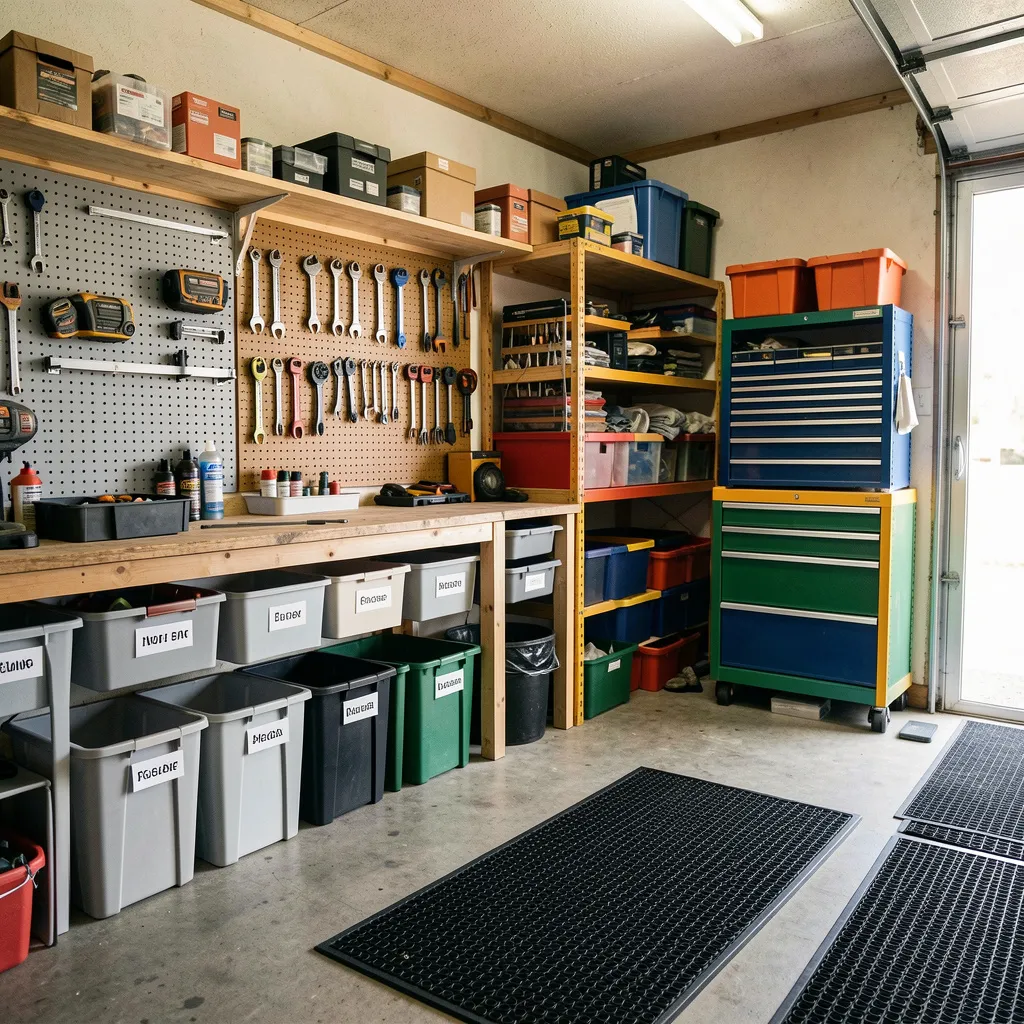
Tool Retrieval Sequence
Frequently used tools should be positioned at eye level and within direct line of sight from the workbench. This reduces search time and maintains workflow continuity.
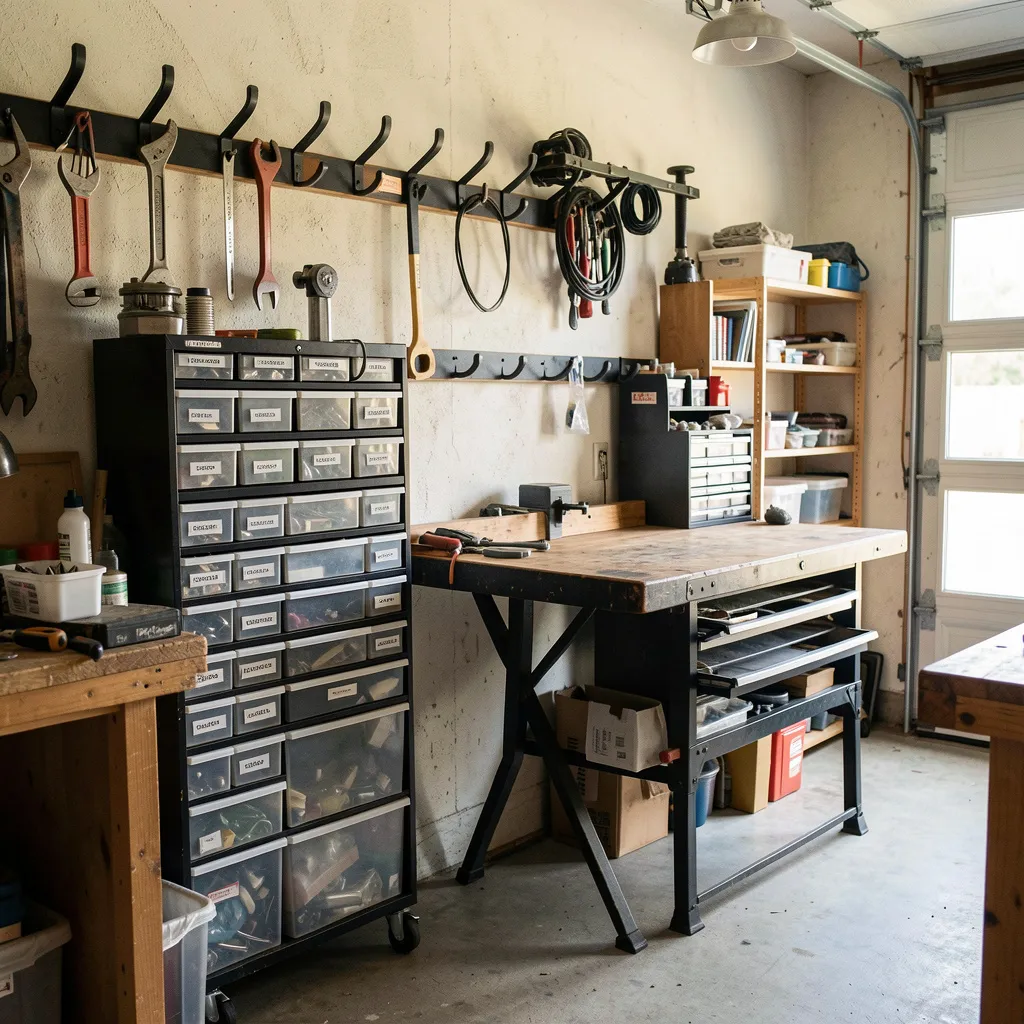
Material Handling Flow
Project materials should flow from storage to staging area to workbench in a logical sequence. Clear pathways prevent bottlenecks and reduce handling time.
Implementation Guidelines & Efficiency Metrics
Systematic workspace organization produces quantifiable improvements in workflow efficiency.
Implementation Strategy
Begin by mapping current tool usage frequency. Tools used daily should occupy the most accessible positions, while seasonal or specialized equipment can occupy secondary storage locations.
Time Reduction
Properly organized workspaces reduce tool search time by an average of 60-70%. This translates to more productive work cycles and reduced project completion times.
Space Utilization
Vertical storage systems reclaim 30-45% of floor space while maintaining or improving tool accessibility. This creates room for larger projects and additional equipment.